[galvanometer scanning mirror]Understanding the Functionality and Applications of Galvanometer Scanning Mirrors in Modern Optical Systems
News 2025-1-28
****Galvanometer scanning mirrors have emerged as essential components in a variety of modern optical systems, playing a crucial role in applications such as laser scanning, microscopy, and optical communication. These mirrors are designed to facilitate rapid and precise angular movement, enabling the manipulation of beams of light over a designated area. This article delves into the mechanics behind galvanometer scanning mirrors, their operational principles, and their vast array of applications across different fields.
Understanding the Functionality and Applications of Galvanometer Scanning Mirrors in Modern Optical Systems
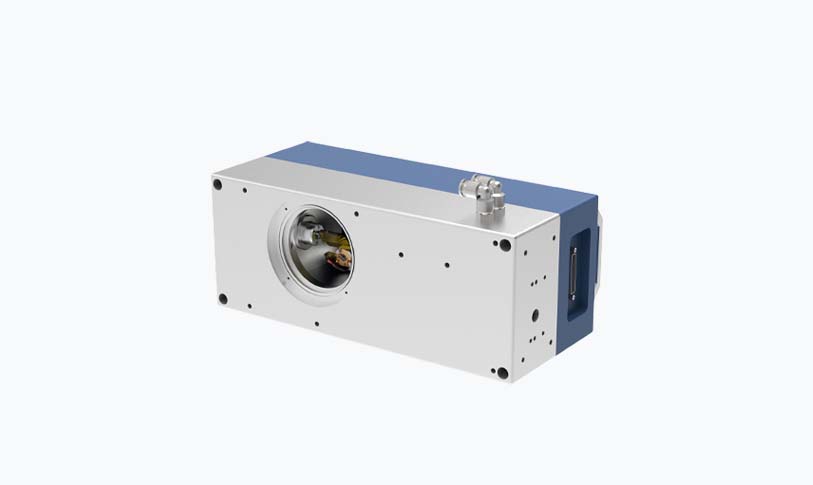
At its core, a galvanometer scanning mirror consists of a lightweight, reflective mirror mounted on a rotating spindle. The spindle is connected to an electromagnetic coil, which interacts with a magnetic field produced by a permanent magnet. When an electric current is passed through the coil, it creates a Lorentz force that causes the mirror to tilt and move in a specific direction. By precisely controlling the current, the angle of the mirror can be adjusted with incredible accuracy. This allows for high-speed scanning of laser beams across various surfaces or within complex optical setups.
Operational Principles
The operational principle of a galvanometer scanning mirror hinges on the fundamental physics of electromagnetism. When the current fluctuates, the intensity and direction of the magnetic field change, leading to corresponding movements in the mirror. The key characteristics that make galvanometer mirrors suitable for scanning applications include:
1. **High Sensitivity**: Galvanometer mirrors can detect minute changes in the current, which translates to precise angular adjustments. This high sensitivity is essential for applications requiring fine resolution. 2. **Fast Response Time**: These mirrors can achieve rapid movements, often in the range of milliseconds, which is crucial for applications such as real-time imaging or laser engraving.
3. **Wide Range of Motion**: Depending on their design, many galvanometer mirrors can achieve angular displacements ranging from a few degrees to several hundred degrees, allowing for versatile scanning capabilities.
Applications in Optical Systems
Galvanometer scanning mirrors find extensive usage across different sectors. Here are some notable applications:
Understanding the Functionality and Applications of Galvanometer Scanning Mirrors in Modern Optical Systems
2. **Optical Coherence Tomography (OCT)**: In medical imaging, particularly OCT, galvanometer mirrors are used to rapidly scan across a sample. This enables high-resolution cross-sectional imaging, facilitating early detection of eye diseases such as glaucoma or macular degeneration.
3. **Additive Manufacturing**: In the field of 3D printing, particularly with laser sintering techniques, galvanometer mirrors control the laser to fuse materials layer by layer. This leads to the creation of complex structures with high accuracy.
Understanding the Functionality and Applications of Galvanometer Scanning Mirrors in Modern Optical Systems
5. **Optical Communication**: In optical communication systems, galvanometer mirrors can be utilized to modulate light beams for data transmission. Their fast response time is invaluable in systems requiring high bandwidth and speed.
Challenges and Future Developments
While galvanometer scanning mirrors offer impressive advantages, they are not without challenges. Issues such as thermal drift, mechanical wear, and the need for accurate calibration can affect their performance over time. Research is ongoing to develop more advanced materials and designs that minimize these weaknesses, potentially leading to longer-lasting and more reliable systems.
Conclusion
In summary, galvanometer scanning mirrors represent a remarkable intersection of physics and engineering, facilitating advancements in numerous fields such as laser scanning, medical imaging, and optical communication. Their ability to provide swift, precise movement makes them indispensable tools in both scientific research and industrial applications. As technology continues to evolve, we can expect further innovations in galvanometer design that will enhance their performance and expand their range of applications, paving the way for new breakthroughs in optics and beyond.